 Image 1 of 1
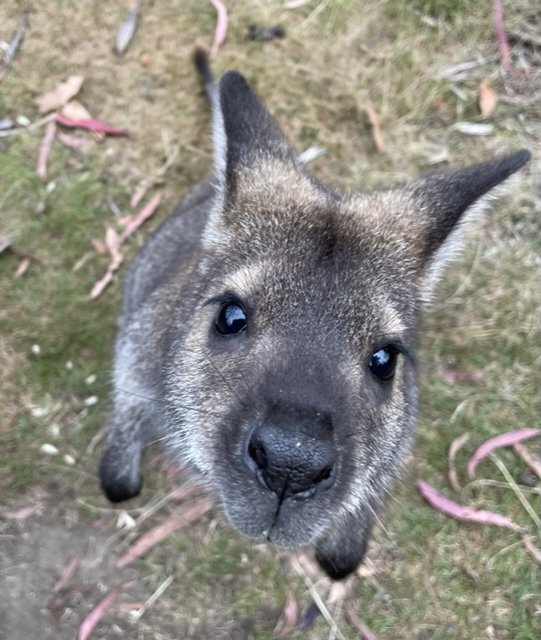
This is Bebe he is a young Bennett’s wallaby. His mother Pip was orphaned on a Tasmanian road but rescued and successfully raised and rehabilitated. Bebe is her first joey and he features with his mum whilst still in her pouch on sign number 56.
Free to come and go, the family of wallabies live on the carers property.
Photograph by Matt Kemp
Bennett's Wallabies are a medium sized Macropod Marsupial. They have mostly tawny grey fur, with a white chest and belly, dark brown muzzle, paws and feet. They are also known as red-necked wallabies because of the reddish-brown fur on their necks and shoulders. They carry their young in their pouch for up to nine months after which Joey continues to suckle for anywhere between three to nine months.
Bennetts Wallabies are generally found in bushlands, and grasslands, but they are increasingly found in urban areas due to habitat loss. They are herbivores and feed on a variety of plants, including grasses, leaves, and bark. Bennetts Wallabies are most active between Dusk and Dawn.